
Books you can trust and check.
Kabacus keeps double-entry books in a file or a database. Every change is validated before it is stored, and every version is kept.
Inside Kabacus
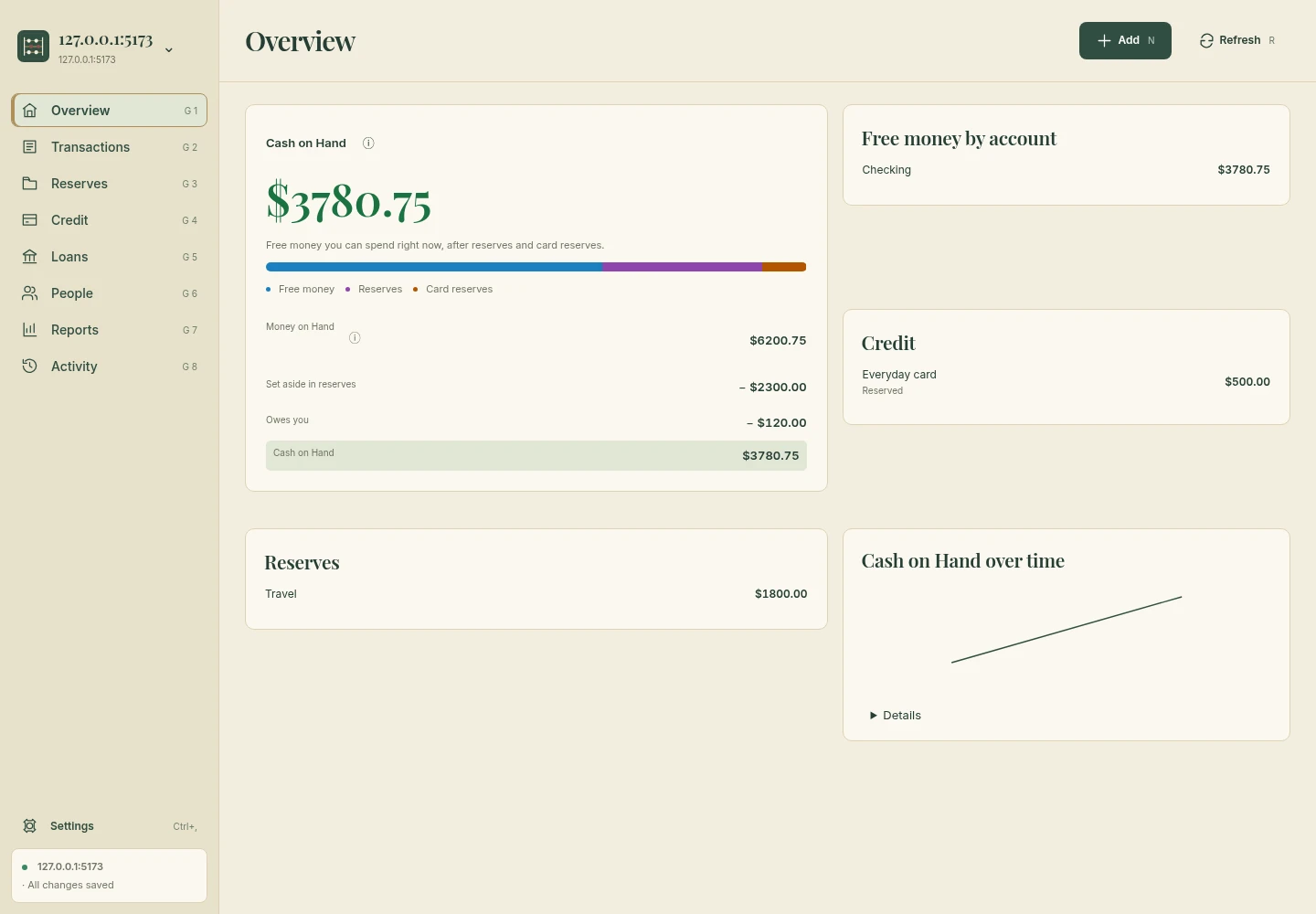
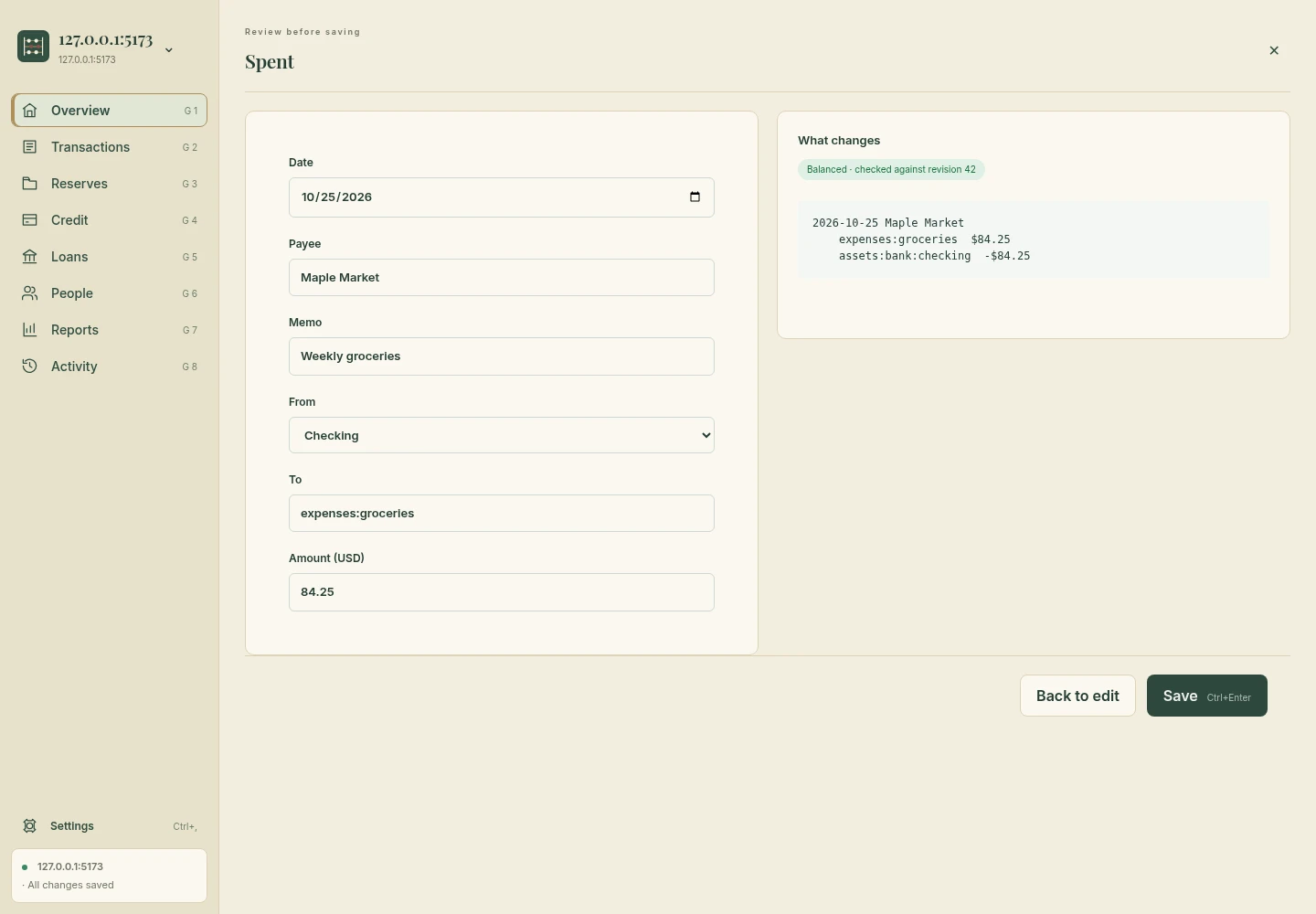
Sample books in the web app. Select a screenshot for its guide.
01 / Features
Cash on Hand
One number for what you can spend right now, after reserves, card balances and money owed to you are set apart.
Reserves instead of budgets
Set money aside for later inside the account that holds it. Only what is really there can be set aside.
Credit cards that add up
A card’s reserve always equals what the card owes, so paying the card never surprises you.
People and shared costs
Split expenses, track who owes whom and export a netted statement as CSV or PDF.
Reports
Income statement, balance sheet, spending by category, Cash on Hand over time, cash flow and receivables.
Reconcile
Compare an account with your statement, see the likely explanations and lock the agreement in with a balance check.
Every version kept
Edits happen in place, voids add a reversal, and the history shows who changed what, with a diff.
Exact money
Amounts are whole numbers with decimal places. Nothing is ever rounded by floating point.
Bring your hledger journals
Import a journal once, export one any time. Accounting follows hledger’s.
KDE, web and phone
A convergent Kirigami app, a web app and installable PWA with the same destinations and words, on desktop and phone.
Command line and MCP
kabacus-cli scripts every action. Local and server MCP let an AI assistant work on your books with the same checks as a person.
Shared books on a server
Several people and devices, sign-in through any OAuth 2.0 / OpenID Connect provider, roles for read, write and rewrite.
02 / Why Kabacus
Careful by design.
Every write is checked against the books it would produce before it is stored: transactions balance, accounts and commodities are declared, balance assertions hold. A preview shows the result first.
Books live in a file you own. A server is only for books shared between people or devices, and the app, the command line and the server all run the same code, so they always agree.